Shakuhachi
The shakuhachi is a Japanese bamboo flute that produces meditative, breathy tones and is used in Zen Buddhist practice. This end-blown flute has only five finger holes but can produce a wide range of expressive sounds.
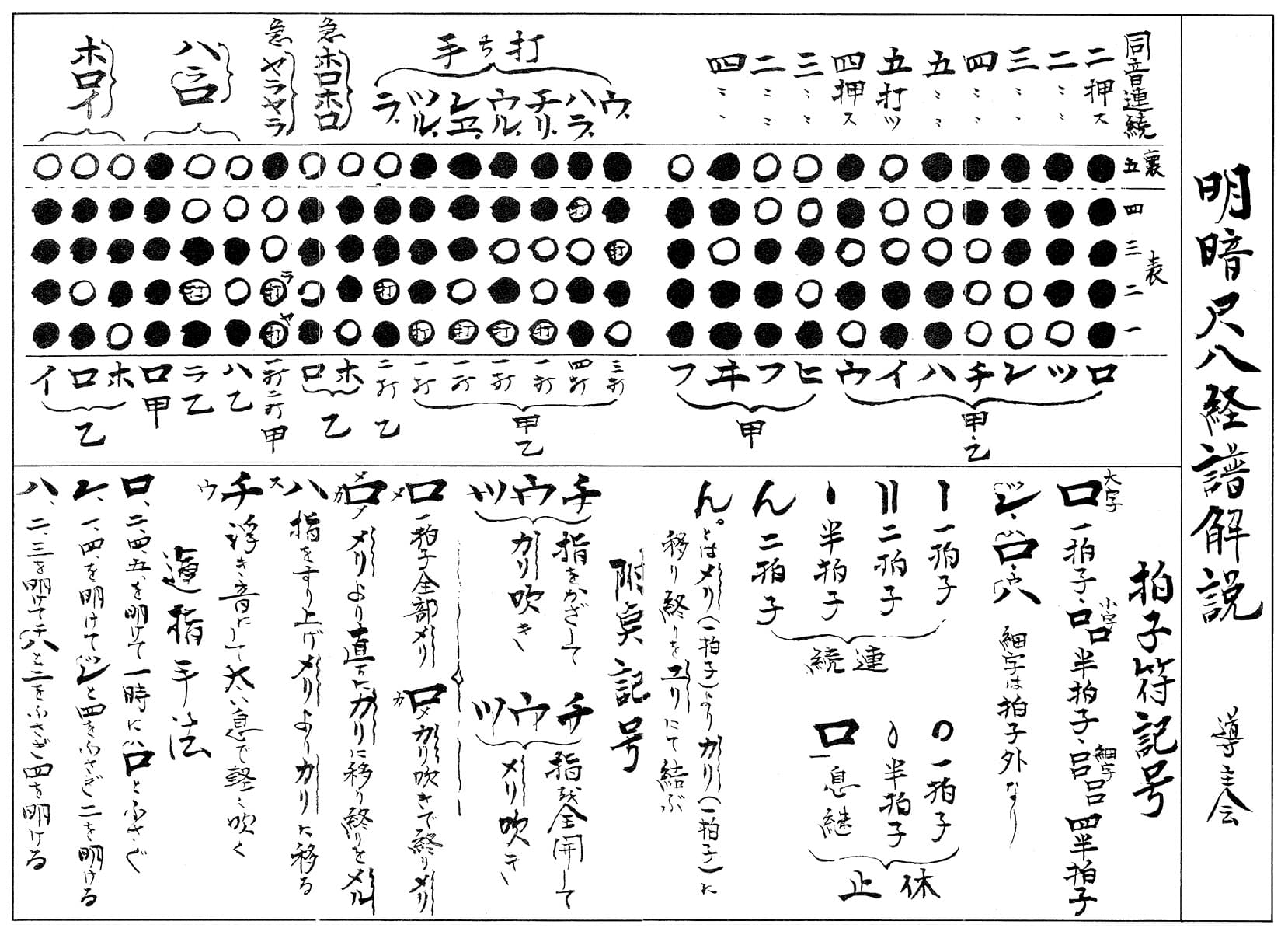
Overview
The shakuhachi is a Japanese bamboo flute that produces meditative, breathy tones and is used in Zen Buddhist practice. This end-blown flute has only five finger holes but can produce a wide range of expressive sounds.
Cultural context
Sacred instrument in Zen Buddhism, representing the breath of enlightenment
Legendary players
- Watazumi DosoArtifact →
- Katsuya Yokoyama—
- Riley LeeArtifact →
Specimen note
Originally used by Zen monks as a spiritual tool, not just a musical instrument.
Technical specifications
Exhibit datasheet · derived from catalog fields
- Materials & construction hints
- bamboo
- Tuning & pitch
- Tuning systems vary by repertoire; consult tradition-specific pedagogy for concert pitch.
- Register & role
- Wind · typical use: Japanese Classical, Zen, World
- Acoustic range (general)
- Frequency range depends on bore, length, and embouchure; treat published ranges as repertoire-dependent.
- Market class (indicative)
- $100-1000
Historical context
Sacred instrument in Zen Buddhism, representing the breath of enlightenment The shakuhachi is a Japanese bamboo flute that produces meditative, breathy tones and is used in Zen Buddhist practice.
Frequently asked questions
- What is a Shakuhachi?
- The shakuhachi is a Japanese bamboo flute that produces meditative, breathy tones and is used in Zen Buddhist practice. This end-blown flute has only five finger holes but can produce a wide range of expressive sounds.
- Where does the Shakuhachi come from?
- Shakuhachi is documented in this archive as a wind tradition associated with Japan. Open the culture guide from this page for regional context.
- How difficult is the Shakuhachi to learn?
- Difficulty varies by player and pedagogy. Use the difficulty field in the quick facts panel as a relative guide, then listen to specimen audio and explore related instruments in the same family.
Discovery web
Related artifacts
Swipe →
- BansuriWind · IndiaShared lineageSame familySame eraRelated catalog
- DiziWind · ChinaShared lineageSame familySame eraRelated catalog
- KotoString · JapanShared lineageSame eraSame region
- Native American FluteWind · North AmericaShared lineageSame familySame era
- Taonga PūoroWind · New ZealandShared lineageSame familySame era
- ZamponaWind · PeruShared lineageSame familySame era
- Pan FluteWind · South AmericaSame familySame era
- AccordionWind · EuropeSame familySame era
- SaxophoneWind · BelgiumSame familySame era
- BandoneónWind · GermanySame familySame era