Santur (Persian)
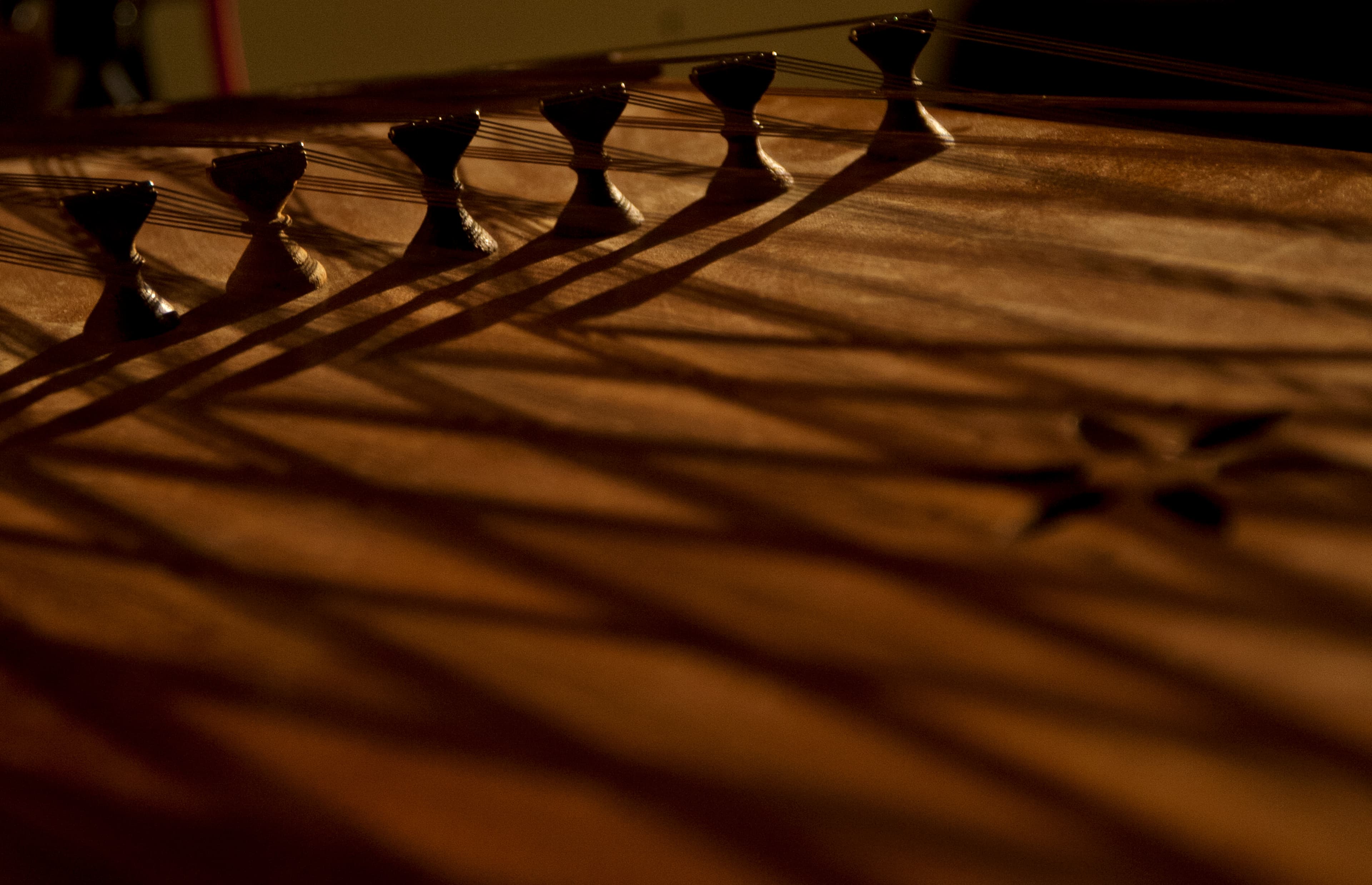
The Persian santur is a hammered dulcimer with 72 strings arranged in 18 groups of 4. Played with delicate wooden hammers, it produces a crystalline, bell-like sound that's central to Persian classical music. The instrument requires incredible precision and has been refined over centuries.
Overview
The Persian santur is a hammered dulcimer with 72 strings arranged in 18 groups of 4. Played with delicate wooden hammers, it produces a crystalline, bell-like sound that's central to Persian classical music. The instrument requires incredible precision and has been refined over centuries.
Cultural context
The santur is central to Persian classical music and represents the sophisticated musical traditions of Iran, with its complex modal system and intricate ornamentation techniques.
Legendary players
- Parviz MeshkatianArtifact →
- Faramarz Payvar—
- Pashang Kamkar—
- Majid Derakhshani—
Specimen note
The santur is one of the most technically demanding Persian instruments, requiring years of study to master the complex microtonal scales and intricate ornamentation.
Technical specifications
Exhibit datasheet · derived from catalog fields
- Materials & construction hints
- See specimen tags and description for construction lineage
- Tuning & pitch
- Pitch material is tradition-specific; see description for scale and temperament context.
- Register & role
- String · typical use: Persian Classical, Traditional Iranian, Middle Eastern
- Acoustic range (general)
- Harmonic content follows string length, tension, and resonator; partials differ by construction.
- Market class (indicative)
- $800-$3000
Historical context
The santur is central to Persian classical music and represents the sophisticated musical traditions of Iran, with its complex modal system and intricate ornamentation techniques. The Persian santur is a hammered dulcimer with 72 strings arranged in 18 groups of 4.
Frequently asked questions
- What is a Santur (Persian)?
- The Persian santur is a hammered dulcimer with 72 strings arranged in 18 groups of 4. Played with delicate wooden hammers, it produces a crystalline, bell-like sound that's central to Persian classical music. The inst…
- Where does the Santur (Persian) come from?
- Santur (Persian) is documented in this archive as a string tradition associated with Iran. Open the culture guide from this page for regional context.
- How difficult is the Santur (Persian) to learn?
- Difficulty varies by player and pedagogy. Use the difficulty field in the quick facts panel as a relative guide, then listen to specimen audio and explore related instruments in the same family.
Discovery web
Related artifacts
Swipe →
- SanturString · PersiaShared lineageSame familySame eraRelated catalogShared artists
- KamanchehString · IranShared lineageSame familySame eraSame regionShared artists
- TarString · IranShared lineageSame familySame eraSame regionShared artists
- SetarString · IranShared lineageSame familySame eraSame regionShared artists
- YangqinString · ChinaShared lineageSame familySame eraRelated catalog
- CimbalomString · HungaryShared lineageSame familySame eraRelated catalog
- DulcimerString · AppalachiaSame familySame eraRelated catalog
- KhimString · ThailandShared lineageSame familySame eraRelated catalog
- QanunString · Middle EastShared lineageSame familySame era
- AutoharpString · United StatesSame familySame eraRelated catalog